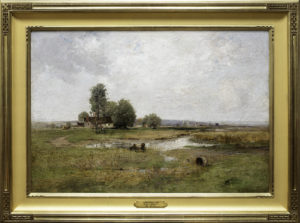
C. E. L. Green (1844-1915) Of the seven artists now referred to as �Lynn Beach Painters,� Charles Edwin Lewis Green ranks in artistic merit after Charles H. Woodbury and before Edward Burrill, Jr. All three were born in Lynn, a city with a burgeoning shoe manufacturing center and wealthy industrialists to support the emerging artistic community. As aspiring painters and friends Green and Woodbury traveled to Holland in the fall of 1889 to visit a European city and savor its artistic heritage. Undoubtedly inspired by the picturesque and atmospheric quality of the country, �C.E.L. Green� (as he began to sign his earliest paintings in the 1880s), for some reason then visited the Cornwall area in the southwest section of Great Britain, and discovered the fishing village of Newlyn. Described as an �English Concarneau,� Newlyn was an artist�s colony and paradise during the late-nineteenth century, as were Penzance and St.Ives, the former also being the railroad station with a link to London. The craggy cliffs and sandy beaches of St. Ives, often acccom- panied by wild weather, was in contrast to the milder atmospheric conditions of Newlyn, and the fisherfolk who lived and toiled in the latter town were natural subjects for popular genre scenes. C. E. L. Green was only in Newlyn until the fall of 1890, but he painted several delightful pictures of fishing vessels and fish auctions along the shore, and made marine paintings a specialty upon his return to Lynn. ...read Charles Edwin Lewis Green's full biography
|